
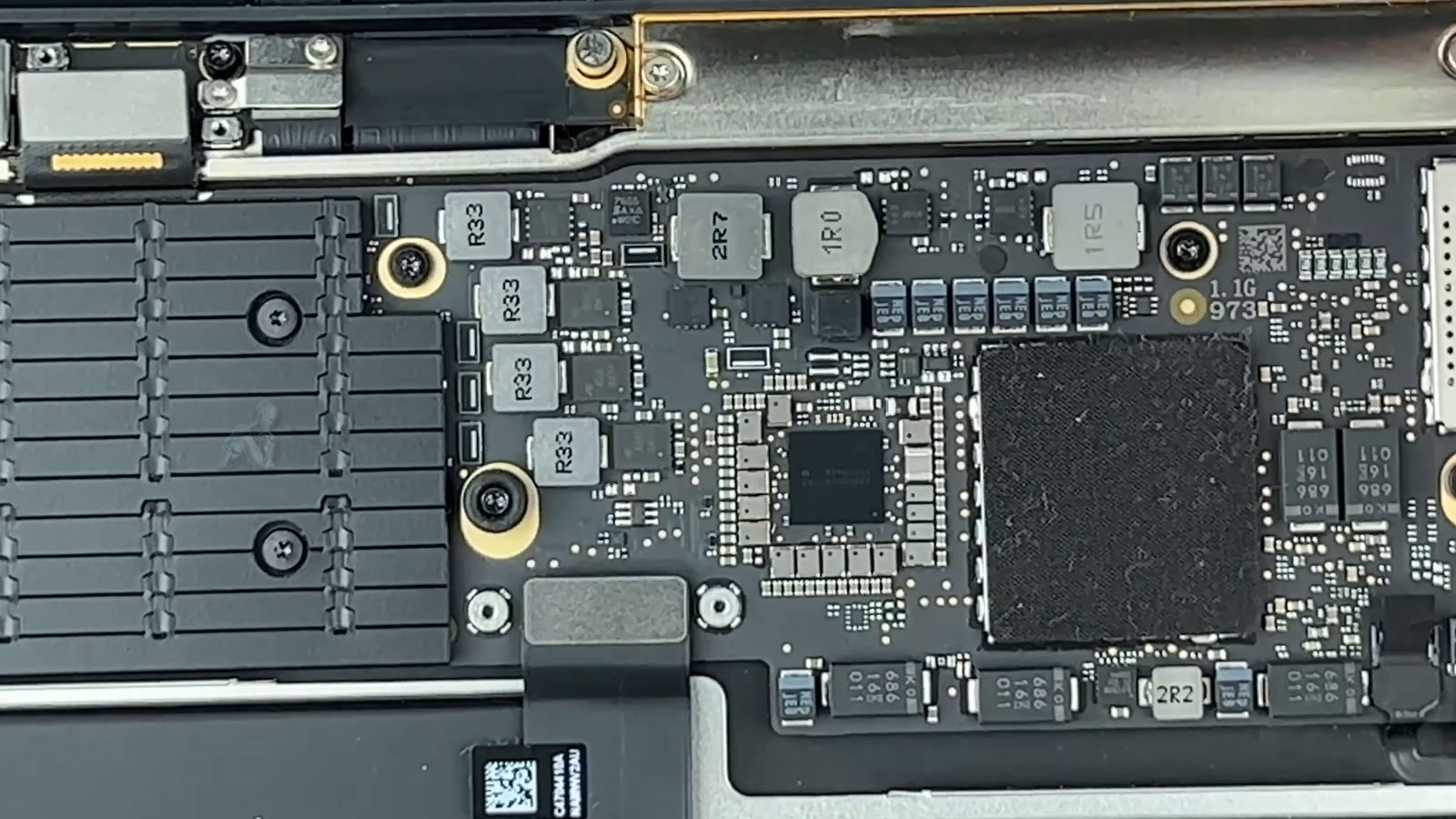
Component-Level Repair for Power, Charging, and System Failures
Component-level repair within a MacBook Air logic board requires precise identification of faults across power delivery, charging circuits, and system control pathways. These subsystems operate through tightly regulated voltage rails and integrated controllers that manage startup sequences, battery charging behavior, and overall system stability. Failures in these areas may present as no power, intermittent startup, or inconsistent charging performance, often originating from degraded components, shorted lines, or compromised circuit integrity. Accurate diagnosis involves isolating affected sections and verifying electrical behavior under controlled conditions to determine the exact point of failure.
Restoring functionality at this level involves targeted intervention on individual components rather than broad replacement. This may include addressing power management ICs, repairing damaged traces, or stabilizing voltage regulation circuits to ensure proper distribution across the board. Each repair is validated through post-repair testing to confirm that power sequencing, charging response, and system operation are consistent and reliable. By focusing on the underlying circuitry, this approach ensures that the logic board regains stable performance aligned with its original electrical design.
Common Signs of Logic Board Failure
Logic board issues can present in many ways, including:
- MacBook Air will not power on
- No charging response with a known good adapter
- Black screen with no startup activity
- Random shutdowns or rebooting
- Keyboard, trackpad, or ports suddenly stop responding
- Excessive heat during light or idle use
- History of liquid exposure or electrical surge
These symptoms often mimic other problems. Accurate diagnosis is essential before any repair decision is made.
Supported MacBook Air Models
Logic board repair is available for:
- MacBook Air with M1 and M2 processors
- MacBook Air Retina models
- Intel based MacBook Air systems
- Units affected by liquid damage or power failure
All repairs are matched to the exact model and revision for compatibility and reliability.
Power Rail Analysis and Voltage Integrity
The stability of a MacBook Air logic board depends on a network of regulated power rails that distribute precise voltages to each subsystem. Irregularities within these rails can lead to startup failures, unexpected shutdowns, or inconsistent system behavior under load. An accurate evaluation involves measuring voltage presence, sequencing, and ripple characteristics across key points to determine whether power delivery is occurring within expected parameters. Deviations from these standards often indicate localized faults such as short circuits, component degradation, or controller-level inconsistencies.
By analyzing voltage integrity at this level, it becomes possible to isolate faults that are not visible through surface inspection alone. This approach ensures that underlying electrical conditions are fully understood before corrective work begins, allowing repairs to be directed with precision. Maintaining stable power distribution is essential for restoring dependable system operation and preventing recurring failures.
Why Component-Level Repair Matters
Replacing an entire logic board is expensive and often unnecessary. Many failures are isolated to individual components that can be repaired safely.
- Targeted repair instead of full replacement
- Lower cost compared to board swaps
- Preservation of original hardware and configuration
- Reduced electronic waste
- Proper diagnosis before any commitment
This approach prioritizes long-term stability, not temporary fixes.
Logic Board Repair Process
Advanced Hardware Diagnostics
Component-level testing is performed to identify faults within power circuits, controllers, memory paths, and charging systems. This allows us to target the actual failure instead of guessing.
Precision Micro-Soldering
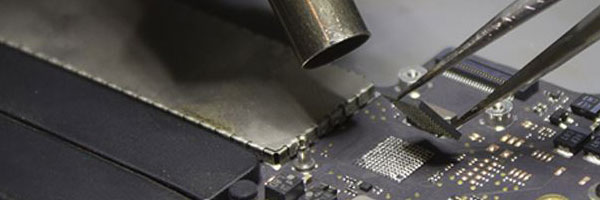
Damaged components such as chips, capacitors, resistors, and connectors are repaired or replaced directly on the logic board using professional micro-soldering equipment.
Apple Security Architecture Handling
Intel models with T2 security and Apple Silicon based MacBook Air systems are handled using appropriate procedures for each architecture. Repair feasibility varies by model and fault type and is always explained clearly before work proceeds.
System Validation and Stress Testing
After repair, the system is tested for power stability, charging behavior, thermal performance, storage recognition, port functionality, and overall responsiveness.
Data Protection Options
If a board cannot be repaired, secure data recovery options can be discussed to help preserve important files stored on the internal drive.
Data Preservation and System Risk Assessment
Logic board failures can directly affect access to internal storage, particularly in configurations where storage is integrated into the board itself. Evaluating the condition of the system includes assessing whether data remains accessible and determining the safest approach to preserve it during the repair process. This requires careful consideration of power conditions, circuit stability, and the potential risks associated with continued operation in a compromised state.
A structured risk assessment ensures that repair decisions are aligned not only with restoring hardware functionality but also with protecting critical information. By identifying potential hazards early and implementing appropriate safeguards, the process minimizes the likelihood of data loss while supporting a controlled and methodical recovery of the system.
Thermal Behavior and Component Stress Evaluation
Thermal performance plays a critical role in the long-term reliability of logic board components. Excessive heat or uneven thermal distribution can accelerate wear, weaken solder joints, and contribute to intermittent faults that are difficult to reproduce under normal conditions. Evaluating thermal behavior involves monitoring how key components respond during operation, identifying hotspots, and determining whether heat-related stress is contributing to system instability.
This level of analysis provides insight into conditions that may not be immediately apparent but can significantly impact performance over time. By addressing thermal irregularities alongside electrical faults, the repair process supports a more stable operating environment. Ensuring that components function within appropriate temperature ranges is essential for preserving the integrity of the logic board and maintaining consistent performance.
If your MacBook Air is unresponsive, failing to charge, or behaving unpredictably, a professional logic board evaluation can determine whether repair is possible and what the safest path forward is. Early diagnosis improves repair success and helps prevent additional damage.