
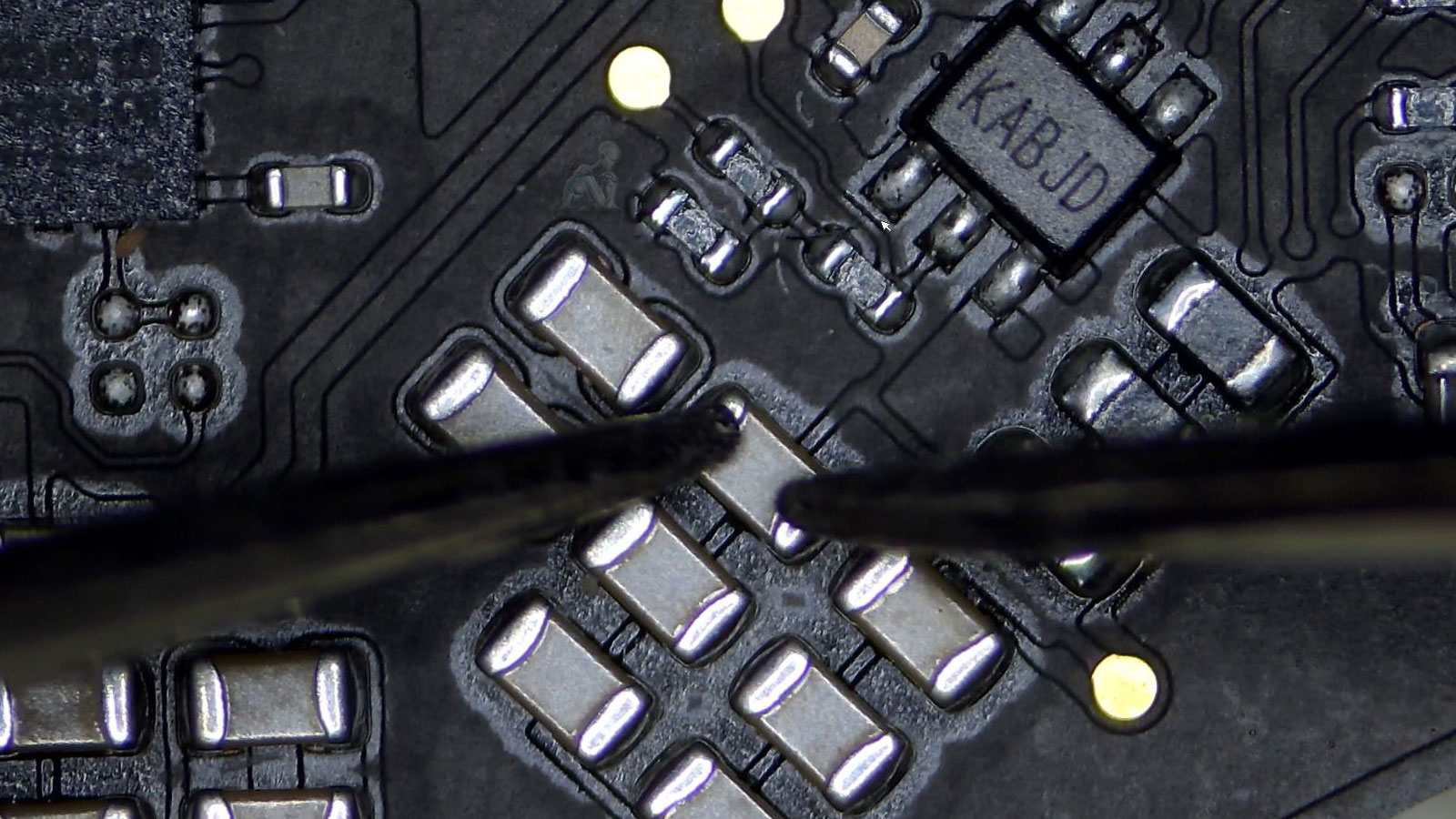
System-Level Analysis and Fault Identification
Accurate repair of a MacBook Pro begins with a system-level analysis that examines how power, data, and control signals interact across the logic board. Rather than focusing on isolated symptoms, this approach evaluates the condition of primary power rails, controller behavior, and the sequence of system initialization to determine where normal operation is interrupted. Measurements taken at key points, including voltage presence, resistance to ground, and signal activity, help define whether the issue originates from a localized component fault or a broader disruption within the board’s architecture.
Fault identification at this level requires correlating electrical readings with known circuit behavior, allowing subtle irregularities to be traced back to their source. Short circuits, unstable power delivery, and degraded components often present indirect symptoms that cannot be resolved without mapping their effect across the system. By establishing a clear relationship between observed behavior and underlying electrical conditions, this process ensures that repairs are directed with precision, reducing the likelihood of misdiagnosis and unnecessary component replacement.
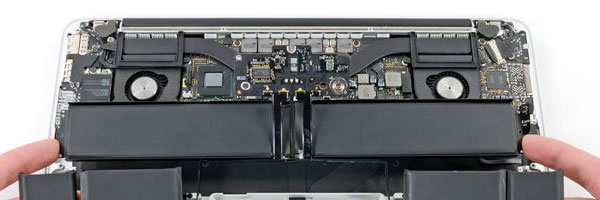
What Diagnostic Evaluation Covers
A complete diagnostic assessment is designed to identify issues related to:
- Power delivery and startup behavior
- Battery health and charging response
- Display output and backlight functionality
- Keyboard, trackpad, and input communication
- Storage integrity and memory stability
- Thermal behavior and fan operation
These checks help distinguish between logic board faults, peripheral failures, storage issues, or operating system corruption.
Supported MacBook Pro Models
Diagnostic services apply to all MacBook Pro generations, including:
- Intel-based MacBook Pro systems
- Apple Silicon models including M1 and M2
- 13-inch, 14-inch, 15-inch, and 16-inch configurations
- Retina display and Touch Bar variants
Each model is evaluated according to its internal architecture and known failure patterns.
For convenience, pickup and return delivery can be arranged within Miami-Dade County when needed.
Diagnostic Constraints and Hardware Limitations
Not all hardware faults can be fully characterized under standard diagnostic conditions. Severe physical damage, compromised multilayer traces, or failures within integrated components can limit the ability to obtain complete electrical readings. In these situations, the diagnostic process focuses on identifying the extent of the failure and determining whether the affected sections of the board remain viable for repair.
Modern MacBook Pro systems also introduce constraints through tightly integrated architectures and security-controlled subsystems. Certain components operate within closed environments that restrict direct interaction, requiring diagnostics to rely on indirect indicators rather than direct access. Recognizing these limitations is essential for setting accurate expectations and ensuring that conclusions are based on what can be reliably verified rather than assumed.
Logic Board and Hardware Inspection
When symptoms indicate deeper failure, diagnostics extend to logic board evaluation. This includes voltage rail verification, inspection for liquid intrusion, component degradation, and communication failures between critical chips such as power controllers, GPUs, and storage interfaces.
Identifying board-level faults early helps determine whether repair, rework, or replacement is the most practical path forward.
Software and System Integrity Review
Diagnostic work also evaluates macOS stability, boot processes, and system logs. Kernel panics, startup loops, and application crashes are analyzed to determine whether the issue is software-based or triggered by underlying hardware instability.
This step ensures that software recovery is not attempted when a hardware fault is present, and vice versa.
Diagnostic Methodology and Signal Tracing
System-level diagnostics rely on a structured methodology that follows the flow of power and communication across the logic board. Rather than testing components in isolation, the process traces how signals propagate through regulators, controllers, and supporting circuitry to identify where normal behavior deviates. This includes analyzing voltage sequencing, monitoring key enable signals, and verifying the relationship between primary rails and dependent subsystems.
Signal tracing allows faults to be isolated with precision, particularly in cases where failures are not visibly apparent. By correlating measurement data with expected circuit behavior, it becomes possible to identify subtle disruptions such as partial shorts, unstable regulators, or inactive control lines. This approach ensures that diagnostics are grounded in measurable conditions, providing a reliable basis for determining the exact point of failure within the system.
Repair Path Definition and Technical Planning
Once diagnostic findings are established, the next step is to define a repair path that aligns with the identified fault conditions. This involves determining whether the issue can be resolved through targeted component replacement, circuit stabilization, or more extensive board-level work. Each approach is selected based on how the fault affects system operation and the feasibility of restoring normal functionality without introducing additional risk.