
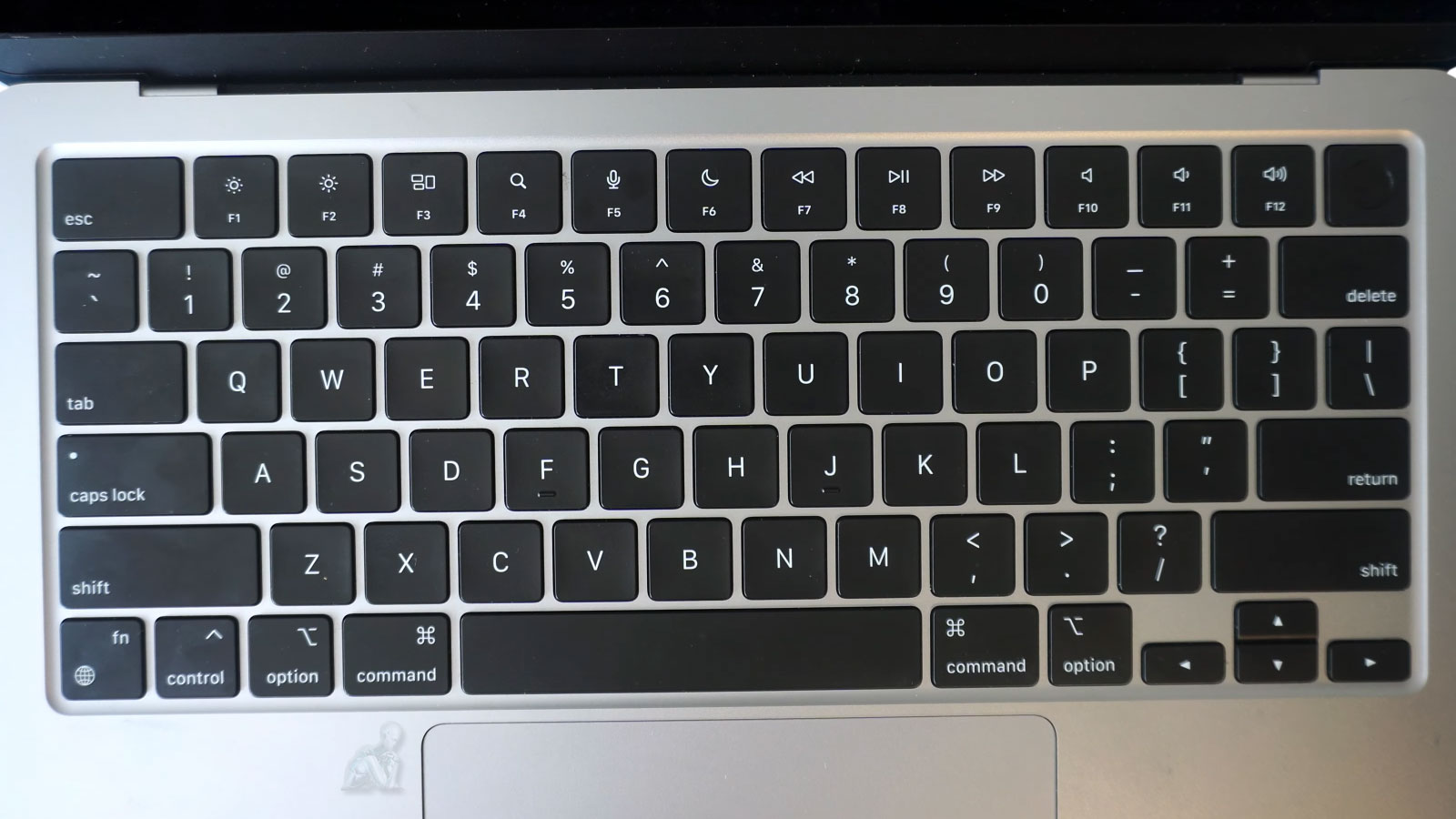
Restoring Accurate Typing and Consistent Key Response
Restoring accurate typing in a MacBook Air requires more than addressing individual key failures. The keyboard operates as an integrated input system where mechanical components, underlying contact layers, and system-level signal interpretation must function in precise coordination. Irregular key response, missed inputs, or unintended character repetition often indicate deeper inconsistencies within this structure. A proper evaluation focuses on identifying whether the issue originates from surface wear, internal contact degradation, or disruptions in the communication pathway between the keyboard assembly and the logic board.
Consistency in key response is achieved by ensuring uniform actuation across the entire keyboard matrix. This involves verifying pressure sensitivity, alignment, and electrical continuity to eliminate variations that can affect typing accuracy. In cases where localized repair cannot restore uniform performance, full assembly replacement may be required to reestablish reliability. By approaching the issue at both the mechanical and electrical levels, the result is a keyboard that delivers stable, predictable input behavior aligned with the system’s intended design.

Common MacBook Air Keyboard Problems
Keyboard issues can present in several ways, including:
- Individual keys not responding or typing multiple characters
- Sticky or physically jammed keys
- Entire rows or sections failing to register input
- Keyboard backlight not turning on or behaving inconsistently
- The keyboard not being recognized by macOS
- Keys becoming loose, detached, or missing
- Input issues following liquid exposure
Each symptom is evaluated to determine whether the issue is mechanical, electrical, or related to internal contamination.
Supported MacBook Air Models
Keyboard repair is available for:
- MacBook Air with Apple Silicon (M1 and M2 generations)
- Retina MacBook Air models
- Intel-based MacBook Air systems
Repairs are matched to the correct keyboard design, including scissor-switch, butterfly, and Magic Keyboard assemblies.
Keyboard Assembly Design and Integration
MacBook Air keyboards are engineered as part of a unified top case structure, where the key mechanisms, backlight system, and internal support layers are integrated into a single assembly. This design improves structural rigidity and reduces overall thickness, but it also means that keyboard-related faults are often interconnected with surrounding components. Issues affecting key response may extend beyond individual switches, involving the underlying membrane layers, backlight circuitry, or the physical alignment of the top case itself.
Understanding this level of integration is essential when determining the appropriate repair path. In many cases, restoring proper functionality requires addressing the entire keyboard assembly rather than isolated elements. This ensures that mechanical consistency, electrical continuity, and structural alignment are all preserved, allowing the keyboard to perform as a cohesive system rather than a collection of independent parts.
Keyboard Repair Process
Inspection and Functional Testing
Each key, switch mechanism, and keyboard circuit is tested to identify whether the issue is isolated or systemic.
Targeted Key Repair
When only specific keys are affected, cleaning or component-level repair may resolve the issue without replacing the full keyboard.
Full Keyboard Replacement
For widespread failure, worn mechanisms, or damage caused by spills, the keyboard assembly is replaced with a model-matched part appropriate for the specific MacBook Air generation.
Spill-Related Cleaning
If liquid exposure is involved, internal layers are cleaned and adjacent components are inspected to ensure no secondary damage is present.
Post-Repair Validation
After repair, the keyboard is tested for full key registration, backlight consistency, and proper system recognition.
Signal Path Integrity and Input Response Analysis
Accurate keyboard operation depends on stable signal transmission between the key matrix and the logic board. Each keystroke is translated into an electrical signal that must be processed without interruption, delay, or distortion. Failures within this pathway can result in intermittent input, delayed response, or incorrect character registration. Diagnosing these conditions involves analyzing how signals propagate through the keyboard circuitry and identifying any irregularities that affect timing or consistency.
This level of analysis extends beyond surface-level symptoms, focusing on the integrity of the entire input chain. By evaluating connection points, ribbon interfaces, and controller behavior, it becomes possible to determine whether the issue is isolated to the keyboard assembly or linked to a broader system condition. Ensuring signal path stability is critical to restoring reliable input performance and maintaining long-term consistency across all typing conditions.
Pickup and Delivery Availability
Pickup and delivery options are available to facilitate secure device handling and minimize disruption during the diagnostic and repair process.
If your MacBook Air keyboard is interfering with daily use, a proper diagnostic can determine whether repair or replacement is the most effective solution. Restoring accurate key response improves productivity, reliability, and overall system usability.