
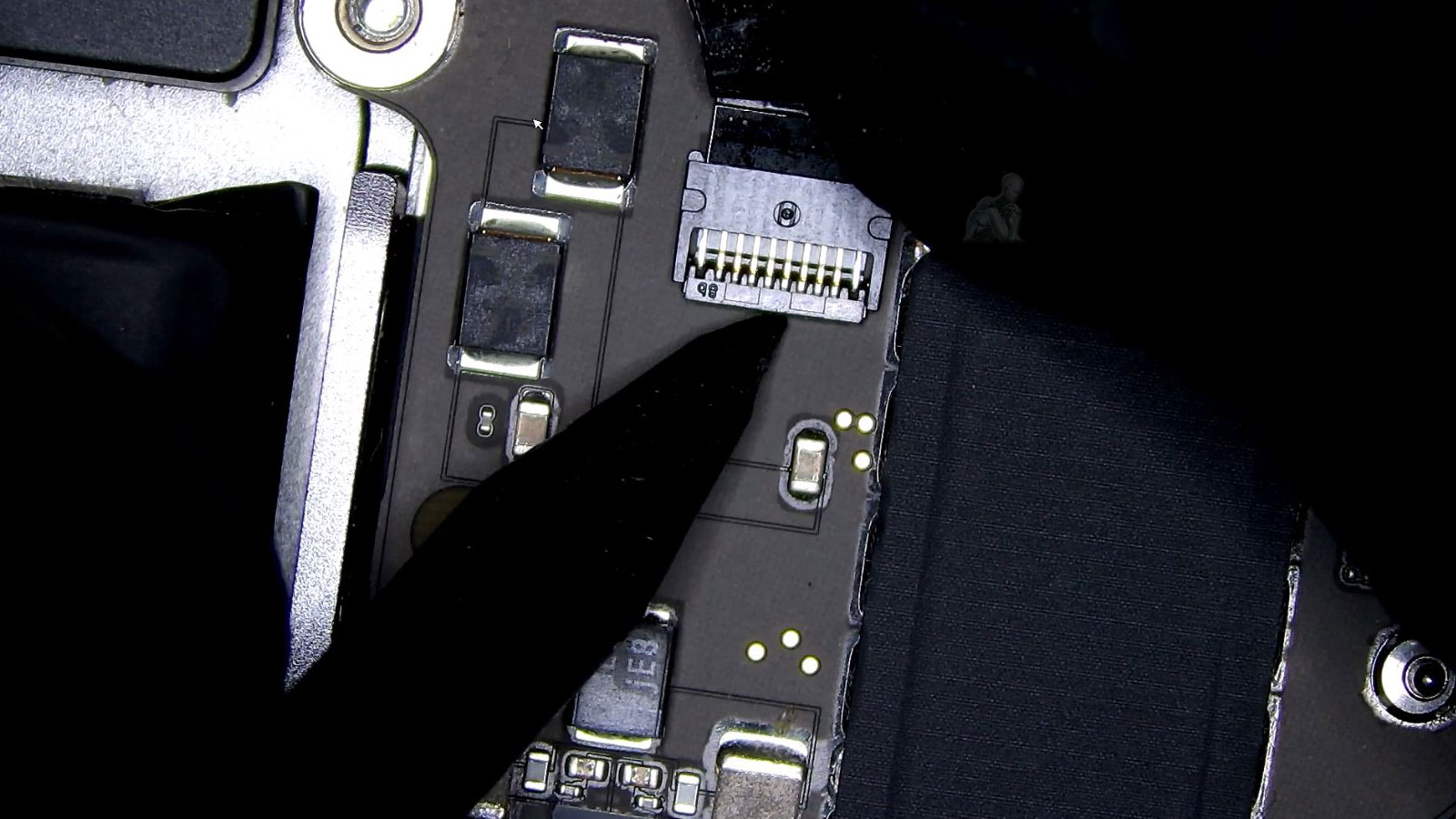
Component-Level Diagnosis and Board Restoration
Logic board faults on a MacBook Pro require analysis at the component level, where individual circuits are evaluated in the context of the system’s overall electrical behavior. Rather than relying on surface symptoms, this approach examines how specific sections of the board respond under measured conditions, including voltage presence, current flow, and interaction between interconnected components. Areas such as power regulation, data pathways, and control logic are assessed to determine where normal operation is interrupted, allowing faults to be traced back to their precise origin.
Board restoration focuses on correcting these identified faults while preserving the integrity of surrounding circuitry. This may involve addressing compromised connectors, stabilizing affected components, or restoring proper electrical conditions within localized sections of the board. Each adjustment is performed with attention to maintaining continuity, preventing secondary damage, and ensuring that repaired areas function in alignment with the system’s original design. The objective is to return the logic board to a stable operating state, where all critical functions perform consistently under normal use.
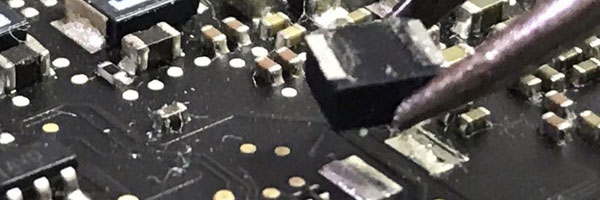
Common Logic Board Failure Symptoms
MacBook Pro does not power on
No charging or intermittent charging behavior
Black screen with or without fan activity
Unexpected shutdowns or restart loops
Kernel panics or system instability
Peripheral failures such as Wi-Fi, Bluetooth, or USB
No response after liquid exposure
Logic board issues often resemble battery, screen, or charger problems, which is why proper diagnosis is critical.
MacBook Pro Models Supported
13-inch, 14-inch, 15-inch, and 16-inch MacBook Pro
Intel-based systems from 2012 through 2020
Apple Silicon systems (M1 and M2), evaluated per case
Retina display and Touch Bar configurations
Some Apple Silicon logic boards have architectural limitations that affect repair viability. These are determined during evaluation.
Liquid-Related Board Failures
Logic boards damaged by liquid exposure often suffer delayed failure due to corrosion beneath components and shielding. This service includes evaluation and repair for boards affected by:
Water exposure
Beverage spills
Condensation or humidity intrusion
Power shorting caused by residue
Early inspection significantly improves repair success.
Board Integrity and Connector Reliability
The reliability of a MacBook Pro logic board depends not only on its internal circuitry but also on the condition of its connectors and physical interfaces. Connectors serve as critical junctions between the board and essential components such as the display, battery, keyboard, and cooling system. Damage to these points, including worn contacts, lifted pads, or mechanical stress, can disrupt communication and power delivery even when the underlying circuits remain functional.
Maintaining board integrity involves ensuring that these connection points remain secure, properly aligned, and free from contamination or structural compromise. Issues at this level can lead to symptoms that mimic deeper hardware faults, making it essential to evaluate both the electrical and physical condition of the board as a whole. Addressing connector reliability helps ensure that restored functionality is consistent across all connected subsystems.
Diagnostic and Evaluation Process
Each MacBook Pro is fully evaluated to determine whether the logic board is the source of failure. The diagnostic process includes:
Power rail and voltage analysis
Short circuit detection
Thermal behavior inspection
Signal and data line tracing
Visual inspection for corrosion or component damage
This allows precise identification of failed circuits or components.
Logic Board Repair Procedures
Component-Level Repair
Failed capacitors, resistors, power controllers, MOSFETs, and logic ICs are repaired or replaced directly on the board using micro-soldering techniques.
Chip-Level Rework
Where applicable, GPU, power management, or controller chips may undergo reflow or reballing procedures based on failure type and board condition.
Corrosion Treatment
Boards affected by liquid exposure are cleaned and stabilized to remove conductive residue and halt corrosion spread.
Post-Repair Validation
After repair, the system is tested for power stability, charging behavior, display output, storage access, wireless functionality, and thermal performance.
Intermittent Fault Behavior and Unstable Operation
Not all logic board failures present as complete system loss. In many cases, the MacBook Pro may power on, operate temporarily, and then exhibit unpredictable behavior such as sudden shutdowns, freezing, or inconsistent peripheral response. These intermittent faults are often more complex to isolate because they do not follow a fixed pattern and may only appear under specific thermal or electrical conditions. As a result, they require extended observation and targeted testing to reproduce and identify the underlying cause.
These conditions are typically linked to marginal components, weakened solder joints, or circuits that no longer maintain stability under load. Rather than a single point of failure, the issue may involve a chain of dependencies where one unstable element affects multiple system functions. Understanding this behavior is critical, as it ensures that repair efforts address the root cause of instability rather than temporary symptoms that may reappear over time.
Logic board repair becomes appropriate when a MacBook Pro exhibits hardware-level faults that cannot be resolved through configuration changes or peripheral replacement. These conditions often include failure to power on, unstable operation under load, non-functional subsystems such as USB, audio, or cooling control, or irregular charging behavior that persists despite a known-good power source. In such cases, the issue is typically rooted within the board itself, where specific circuits or components are no longer operating within their intended parameters.
If your device is showing these signs, you can submit a service request with details about the symptoms or reach out by phone for a more immediate response. Sharing information about how the system behaves helps clarify the situation quickly and allows the next steps to be outlined without unnecessary delay. The focus is to move from uncertainty to a defined course of action based on the actual condition of the logic board.