
MacBook Pro Liquid and Water Damage Repair in Miami
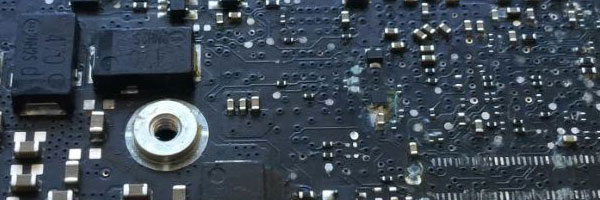
Component-Level Cleaning and Board Restoration
Liquid exposure is one of the most destructive failures a MacBook Pro can experience. Even small spills can migrate beneath shields, connectors, and chips, causing corrosion that worsens over time. This service focuses on identifying liquid intrusion, removing contamination, and restoring affected components before damage becomes irreversible.
Immediate shutdown does not guarantee safety. Many liquid-related failures develop days or weeks after exposure due to delayed corrosion.
Common Effects of Liquid Exposure
System does not power on
Intermittent shutdowns or restart loops
Keyboard or trackpad malfunction
Charging or battery detection failure
Dim display or no video output
Overheating or abnormal power behavior
Corrosion on internal connectors or logic board traces
Symptoms may appear gradually and are often misdiagnosed as unrelated hardware faults.
Liquid Damage Evaluation Process
Each device is fully disassembled and inspected to determine the extent of exposure. This includes:
Logic board surface and under-shield inspection
Connector and flex cable contamination checks
Battery, keyboard, and trackpad assessment
Power and charging circuit evaluation
This process establishes whether the damage is localized or system-wide.
Board Cleaning and Repair Procedures
Ultrasonic Board Cleaning
Specialized ultrasonic equipment is used to remove residue, minerals, and corrosion from the logic board and affected components without causing mechanical stress.
Component-Level Repair
Damaged chips, capacitors, resistors, and connectors are repaired or replaced directly on the board using micro-soldering techniques.
Circuit Integrity Testing
After cleaning and repair, voltage rails, data paths, and power behavior are tested to confirm stability.
System Reassembly and Validation
All major subsystems are tested, including input devices, display output, charging behavior, wireless connectivity, and thermal response.
MacBook Pro Models Supported
13-inch, 14-inch, 15-inch, and 16-inch MacBook Pro
Intel-based systems (2012–2020)
Apple Silicon systems (M1 and M2), evaluated per case
Retina, Touch Bar, and Magic Keyboard designs
Each model is handled according to its internal layout and board architecture.
Post-Liquid Exposure Considerations
Liquid damage often affects multiple components beyond the logic board. When applicable, further evaluation may include:
Battery condition and swelling
Keyboard and trackpad reliability
Display backlight or panel damage
Storage integrity and data recovery feasibility
Repair options are determined only after the diagnostic process is complete.
When to Request Liquid Damage Service
If a MacBook Pro has been exposed to liquid at any level, professional inspection is strongly recommended even if the system still appears functional. Early intervention significantly increases repair success and reduces long-term failure risk.
Requests for evaluation can be submitted using the contact us page.
© 2011-2026 Computer Repair Miamis . All Rights Reserved.


